
A successful promotion can bring thousands of new customers through the door. But how many will come back when there’s nothing on offer?
That was the question at the heart of our latest Virtual Loyalty Brunch, hosted by Europe’s Loyalty Association (The ELA™) in partnership with Braze on 3 November.
Drawing on findings from our jointly developed report, Q-phoria Unleashed: Loyalty That Electrifies Engagement All Year Round, the discussion explored the uncomfortable gap between acquiring customers and actually giving them a reason to return.
Moderated by Pauline van Dongen-Deckers, the session featured Emma Jane Rodrigues from Braze, alongside two ELA members bringing their experiences from very different businesses: Dani McManus, Head of Loyalty & CRM at wagamama, and Tijn van der Heijden, Head of Membership at bol.
And the conversation went well beyond the usual advice about personalisation, points and rewards.
What the Q-phoria report tells us
Before hearing from our brand practitioners, Emma Jane Rodrigues from Braze walked us through the report’s key findings and four important considerations for brands looking beyond Q4.
- Q4 is the beginning, not the end.
The influx of seasonal shoppers creates an opportunity, but acquiring customers is only half the job. What brands do after that first transaction determines whether those customers have a reason to return.
- Rethink what customers actually value.
Points and discounts have their place, but customers also value convenience, recognition, relevant experiences and feeling understood. The challenge is balancing commercial objectives with what customers genuinely want.
- Turn customer data into something useful.
The report explores how journey mapping, better-connected data, predictive analytics and personalisation can help brands understand customer behaviour and make their next interaction more relevant. AI offers opportunities to improve these decisions, provided it creates value rather than simply more marketing activity.
- Don’t forget the human element.
Technology can make loyalty programmes smarter, but recognition, belonging, shared values and memorable experiences can give customers reasons to engage beyond the transaction.
Together, these themes provided the backdrop for the discussion with Dani and Tijn, who brought their own experiences, challenges and occasionally differing perspectives to the findings.
1. The January Problem Is Real
Before the webinar, we asked registrants what happens to most of their Q4-acquired customers after January.
56% said some return, but not enough.
That finding set the scene for a discussion about what happens when the promotions end, the festive shopping frenzy disappears and customers return to their usual routines.
The wider research presents an equally uncomfortable picture.
62% of consumers believe loyalty programmes exist primarily to make them spend more money.
Meanwhile, research from The ELA™ found that 58% of loyalty decisions are driven by commercial pressure, compared with just 22% primarily driven by customer insight.
Are customers seeing something brands aren’t?
The challenge isn’t that commercial targets are wrong. It’s that brands risk becoming so focused on the initial transaction that they forget to build a reason for the next one.
2. More sign-ups don’t necessarily mean better customers
One of the most revealing moments came from Dani McManus, who shared an example from wagamama’s Soul Club loyalty programme.
Following a successful launch, acquisition rates began to settle. To reignite growth, the team introduced an incentive for restaurant colleagues and made the programme’s welcome offer more attractive.
The immediate results looked excellent.
Acquisitions soared.
But when the campaign ended, sign-ups returned to previous levels. More importantly, longer-term analysis revealed something rather less encouraging.
The members acquired during the promotion were among the least likely to return, engage with communications or continue participating in the programme.
The campaign had succeeded at attracting registrations, but those registrations weren’t translating into lasting engagement.
Dani explained why loyalty teams need to look beyond the initial sign-up and pay much closer attention to the second and third visits.
It’s an important distinction.
A campaign can look successful on an acquisition dashboard while delivering disappointing long-term value.
The takeaway: Don’t judge a promotion by how many people it attracts. Measure what those people do afterwards
3. Perhaps loyalty isn’t always about love
Tijn van der Heijden brought a different perspective from bol, the Dutch and Belgian e-commerce platform.
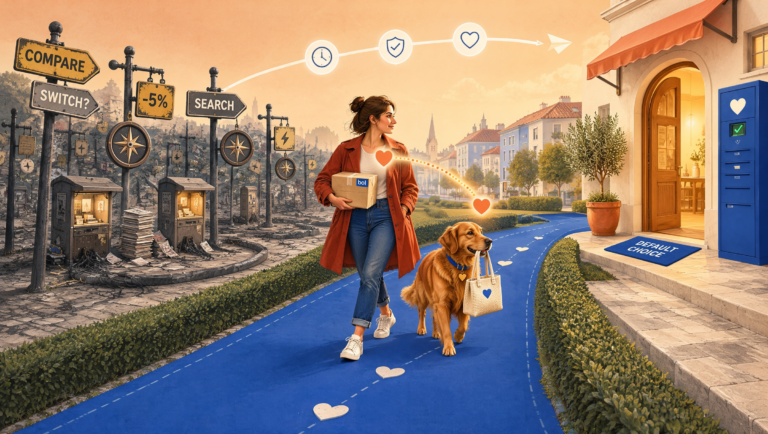
In an environment where customers can compare prices and switch retailers within seconds, Tijn argued that loyalty is ultimately demonstrated through behaviour.
His ambition is to make bol the customer’s default choice.
That doesn’t necessarily require an emotional attachment. Sometimes it’s simply about making the experience familiar, reliable and easier than going elsewhere.
As Tijn explained:
“The real test is whether customers continue to choose us when the original incentive disappears.”
He outlined three priorities for encouraging that next purchase:
- Make sure the first experience delivers on its promise.
- Understand what the customer is likely to need next.
- Make the next purchase as easy as possible.
His approach also challenges the assumption that discounts are inherently bad.
A discount can be a perfectly valid acquisition tool. The problem arises when customers have no other reason to return.
Tijn also stressed the importance of control groups and A/B testing. Customers receiving a follow-up campaign might have returned anyway, so brands need to establish whether their activity genuinely changes behaviour.
4. Two brands, two different definitions of loyalty
Perhaps the most interesting contrast was between Dani and Tijn themselves.
For Dani, loyalty is fundamentally a feeling.
At wagamama, the food matters, but so do the memories customers associate with the brand and the welcome they receive from restaurant colleagues.
The Soul Club programme can encourage visits and recognise guests, but the experience inside the restaurant must deliver on that promise.
Dani also highlighted early member previews, invitations to events and experiences that money cannot easily buy as ways to keep customers engaged.
Tijn, meanwhile, focused on convenience, habit and consistently being chosen over competitors.
Neither approach is necessarily more effective.
They reflect different customer needs and different purchasing environments.
A restaurant might build loyalty through human interaction and shared experiences. An e-commerce platform might achieve it by saving customers time and effort.
The takeaway: Stop assuming every loyalty programme needs to create the same kind of relationship.
5. AI could help. But more messages aren’t the answer.
AI featured heavily in the report presentation, particularly its potential to improve personalisation, campaign production and decision-making.
But The ELA™ research highlighted how early many organisations still are in their adoption.
While 42% reported using AI in specific areas and 33% were experimenting, just 6% said AI was embedded in regular workflows.
Emma demonstrated how Braze’s AI capabilities can help brands make decisions about the right message, channel, timing and offer for individual customers.
One example involved a camera brand that had been automatically sending accessory discounts following purchases.
Analysis identified customers who were likely to purchase accessories without an incentive.
By avoiding unnecessary offers and tailoring communications, the brand achieved a reported 8–11% uplift over business as usual, while protecting margins.
But the practitioner discussion introduced an important caution.
Tijn warned that AI could simply result in more messages and more interactions without improving the customer experience.
Dani agreed that AI could help teams understand customers and work more effectively, but questioned whether its contribution to loyalty itself was yet fully understood.
She also raised concerns about damaging trust if automated interactions undermine the human connection customers value.
The takeaway: AI should make the customer experience better, not simply make marketing activity faster.

6. What if customers don’t buy very often?
An audience question raised another important challenge.
How should brands define loyalty when customers might go more than a year between purchases?
Pauline suggested that loyalty could include recommendations and advocacy, rather than just purchase frequency.
Tijn returned to his central argument: the objective is to become the customer’s default choice whenever that particular need arises.
For brands selling infrequently purchased products, the challenge is therefore to remain relevant and memorable between transactions.
It also means that conventional frequency-based measures may not tell the whole story.
A customer who hasn’t purchased recently isn’t necessarily disloyal.
7. Five things to take back to your team
Across the research, examples and discussion, five practical priorities emerged:
- Look beyond acquisition. Track second and third purchases, engagement and longer-term customer behaviour.
- Challenge discount dependency. Understand which customers genuinely need an incentive and which would return without one.
- Make returning easier. Convenience, reliability and removing friction can be powerful reasons to choose a brand again.
- Use data to improve experiences. Better personalisation should solve customer problems, not simply increase message volume.
- Define loyalty for your business. Repeat purchases matter, but so can preference, advocacy, trust and being the first brand customers think of.
The question worth taking into January
Q4 will continue to be commercially important. Promotions will continue to attract customers, and discounts will remain part of the retail toolkit.
But perhaps the most useful question isn’t how many new customers a brand can acquire during its busiest quarter.
It’s whether those customers have been given a good enough reason to choose that brand again.
And, as Dani and Tijn demonstrated, that reason might be an emotional connection, a memorable experience, a reliable service or simply making life easier.
The real work begins after the transaction.
Watch the webinar and download the report
Watch the Virtual Loyalty Brunch recording:
Watch the recording
Recording passcode: rRDp$4r6
Download the full report:
Q-phoria Unleashed: Loyalty That Electrifies Engagement All Year Round
