
I was getting my usual haircut earlier this month when the conversation turned from football to my studies at Cambridge. I asked my barber a question many in our industry are currently losing sleep over: “Do you think AI will take away our jobs one day?”
He smiled and shared a profound insight without using a single word of CRM jargon. He noted that 90% of his business comes from long-term clients—some of whom have been with him for over a decade. To him, even the most advanced AI-driven booking system is secondary to the deep human connection he has built over the years.
In the world of customer engagement, we often forget this fundamental truth: Loyalty is built on trust, not just algorithms.

The Limits of Technology
As AI continues to evolve, we must distinguish between what technology can do and what it cannot.
- What it can do: AI can drive productivity, automate repetitive tasks, and make high-velocity recommendations based on past purchase behaviours.
- What it cannot do: Technology cannot forge a genuine emotional bond. Dario Amodei, CEO of Anthropic, recently noted that tasks that are human-centric and involve relating to people will stand the test of AI over time. (Source: Anthropic CEO on Human-Centric Tasks)
In my experience leading data activation at L’Oréal, I have seen this philosophy in action through our Skin Analyser technology. While proprietary Beauty Tech can highlight tailor-made skincare solutions with mathematical precision, the data consistently reveals a clear pattern: it is the trust built between the customer and the brand ambassador that ultimately closes the transaction. The technology is the enabler; the human connection is the closer.

The “People-Led, Tech-Powered” Strategy
The most successful organisations are moving away from the “People or Technology” binary. Instead, they are adopting a “People + Technology” mindset.
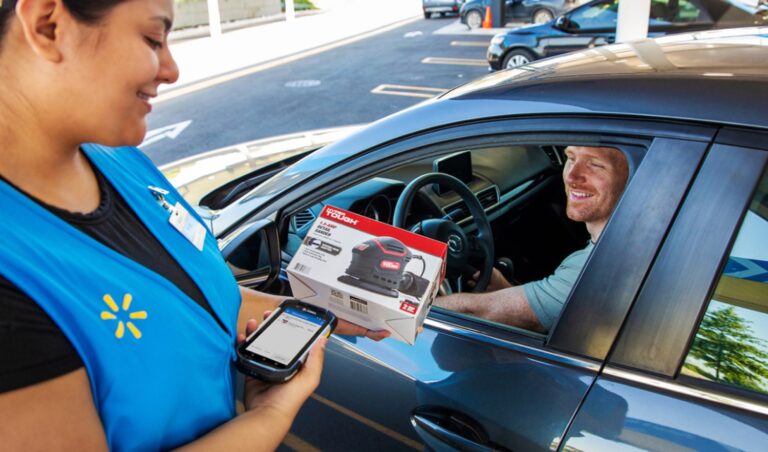
A prime example is Walmart. The retail giant has leaned into a “people-led, tech-powered” strategy. Rather than replacing human roles with AI, they are:
- Investing in AI Education: Training 1.6 million workers—from corporate to the frontline—in AI literacy. (Source: Fortune: Walmart’s AI Training Investment)
Equipping the Frontline: Providing digital tools that remove administrative friction, allowing associates to spend more time serving customers. (Source: LinkedIn: Donna Morris on Evolving Work)
The Strategic Blueprint: Redefining Productivity
In the new era of CRM, “Productivity” does not mean doing the same task faster; it means a fundamental disruption of the nature of work. Consider the evolution of the salon:
The Past: A staff member stops their craft to answer a booking call.
The Present: An online system captures the slot.
The Agentic Future: An AI agent manages the entire lifecycle—triggering WhatsApp confirmations, sending personalised 24-hour reminders, and handling complex customer queries instantly.
This isn’t just “being faster.” It is a shift in how the business interacts with the consumer. However, the strategic leader must define the boundaries: we use AI to manage the logistics of the journey, but we categorically do not use a robot to give the haircut.

Future-Proofing CRM through Concrete Governance
To manage this shift, companies need more than just a legal review of vendor contracts; they need a Digital Advisory Board. This board’s role is to define exactly which tasks belong to AI and which are sacred to humans. In my view, this is where governance becomes practical:
- Data Governance as a Trust Shield: Using an advanced Skin Analyser is a powerful tool for personalisation. However, true governance requires clear guardrails: for instance, we should analyse the face to recommend a product in the moment, without storing permanent “face records.” Data should be used in its aggregated form to fuel New Product Development (NPD), ensuring we never trace insights back to the individual. Trust is built when personalisation never feels like surveillance.
- AI Governance as an Empathy Enabler: AI can search a portfolio and recommend a moisturiser with 100% accuracy. But technology cannot share the human experience of struggling with dry skin during a harsh winter. Strategic governance ensures we use AI to handle the data-heavy “search and recommend” tasks, liberating Brand Ambassadors to provide the genuine, face-to-face empathy that a customer actually craves.
Conclusion
AI won’t take your job in CRM, but a company that uses AI to empower its people better than yours might. The goal of automation is to strip away the repetitive “noise”—the scheduling, the data entry, and the basic Q&A—so that our staff can focus entirely on the person standing in front of them.
This shift requires leadership that views AI as a teammate, not a replacement for headcount. True future-proofing isn’t about replacing the artist; it’s about giving the artist better tools so they can focus on their craft.
Next time I sit in my barber’s chair, I want to tell him he was right. I’ll tell him that we aren’t using technology to replace the conversation—we’re using it to handle the busywork so our experts can focus on building a connection that lasts a decade. Because at the end of the day, you can’t programme trust, and you certainly can’t automate a soul.

Billy Cheng is the Head of Consumer Data Activation at L’Oréal, overseeing CRM and personalisation strategies across the group’s four divisions and 30+ iconic brands, including Lancôme and Kiehl’s. A specialist in the commercial activation of large consumer data sets, he advocates for a “people + tech” philosophy—viewing personalisation not merely as an algorithm, but as a bridge to meaningful 1:1 human interaction. Prior to L’Oréal, Billy held senior leadership roles at Reckitt and A.S. Watson (Superdrug). He is currently an Executive MBA candidate at the University of Cambridge, focusing on building data-driven organisations through the ethical use of AI.
I welcome further dialogue on building human-centric, data-driven organisations. Let’s connect on LinkedIn here.
The views expressed in this article are the author’s own and do not necessarily reflect the official policy or position of any mentioned organisation.
